
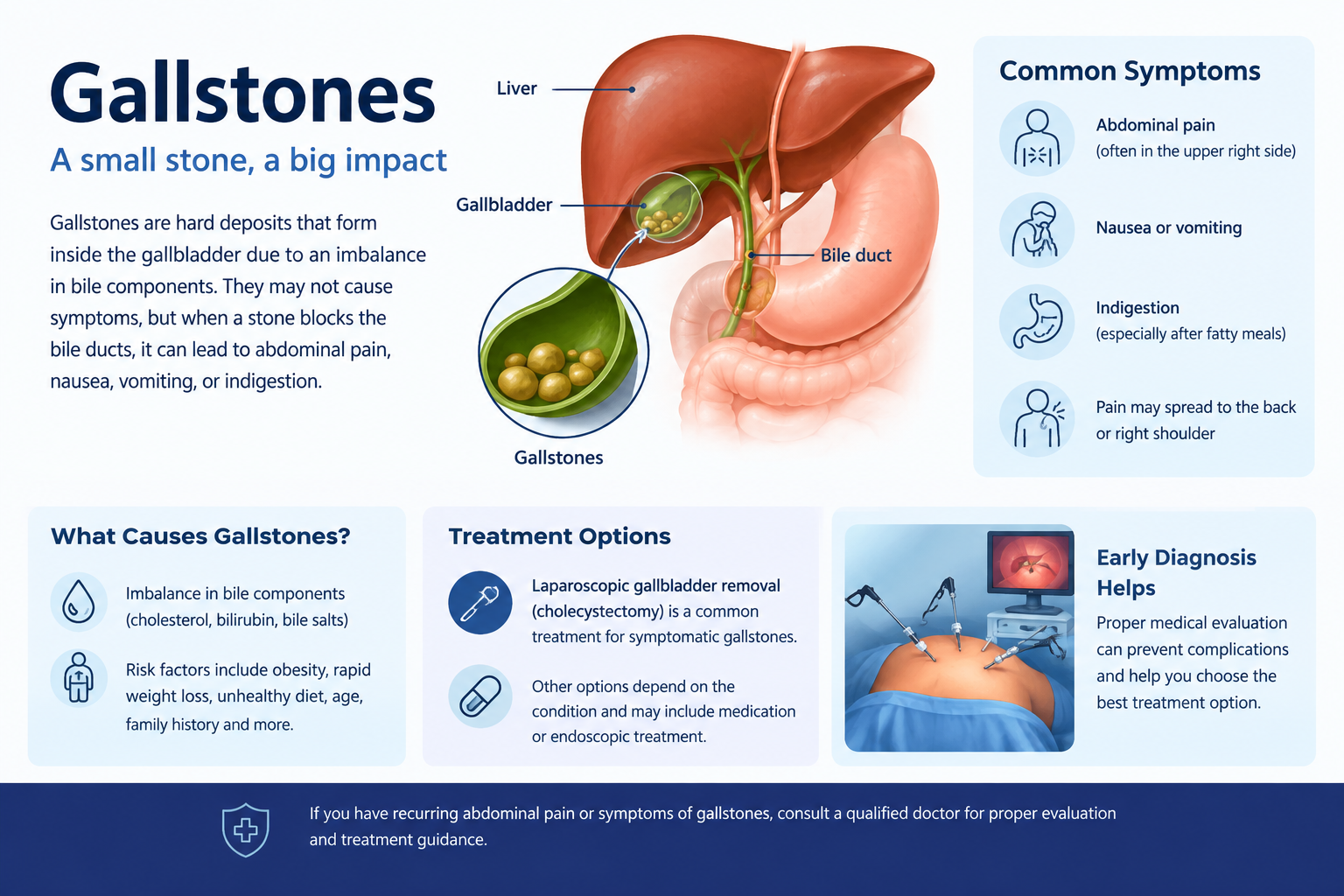
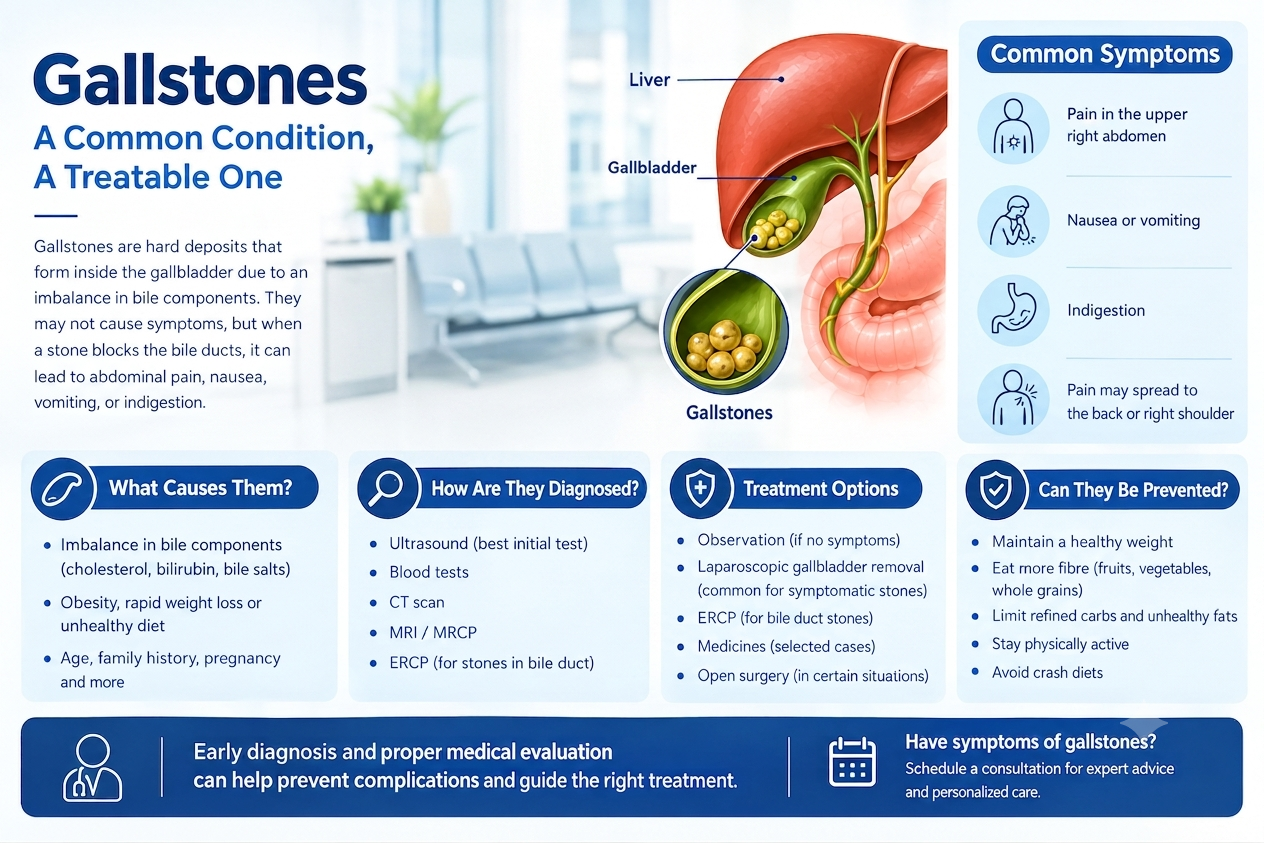
Gallstones are hard deposits that form inside the gallbladder due to an imbalance in bile components. They may not cause symptoms, but when a stone blocks the bile ducts, it can lead to abdominal pain, nausea, vomiting, or indigestion.
Treatment depends on the symptoms and severity. Laparoscopic gallbladder removal (cholecystectomy) is a common treatment for symptomatic gallstones. Early diagnosis and proper medical evaluation can help prevent complications.
Gallstones are hard, pebble-like deposits that form inside the gallbladder. They can be as small as grains of sand or larger stones, and some people may have several stones at the same time. While many gallstones do not cause any symptoms, stones that block the bile ducts can lead to pain, inflammation, infection, and other complications.
Understanding the symptoms, causes, risk factors, and treatment options can help you seek medical attention at the right time.
The gallbladder is a small, pear-shaped organ located beneath the liver. It stores bile, a digestive fluid produced by the liver, and releases it into the small intestine to help digest fats.
Gallstones, also called cholelithiasis, develop when substances in bile become unbalanced and form solid particles. The two main types are:
Cholesterol stones: Usually yellowish-green and mainly made of hardened cholesterol.
Pigment stones: Usually darker and formed mainly from bilirubin.
Gallstones may remain inside the gallbladder without causing any problems. These are often called silent gallstones and may not require treatment if they are not causing symptoms.
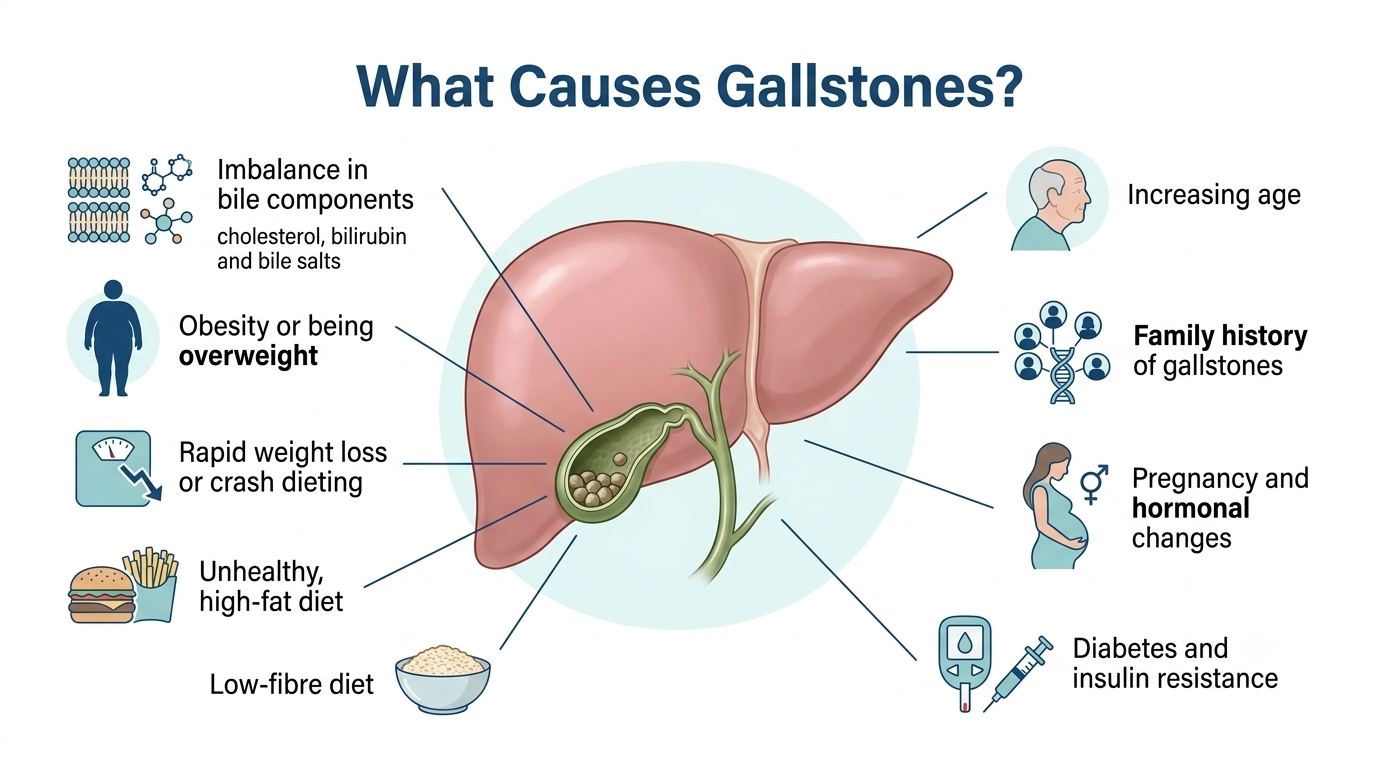
Gallstones can develop when there is an imbalance in the substances that make up bile. They may form when bile contains too much cholesterol, too much bilirubin, or not enough bile salts.
Gallstones can also develop when the gallbladder does not empty properly or frequently enough.
Several factors can increase the risk of developing gallstones, including:
Being overweight or having obesity
Rapid weight loss or crash dieting
A diet high in refined carbohydrates and unhealthy fats
Low-fibre eating habits
Increasing age
Family history of gallstones
Pregnancy and certain hormonal factors
Diabetes and insulin resistance
Certain liver or intestinal conditions
Some conditions that cause increased breakdown of red blood cells
Having one or more risk factors does not necessarily mean you will develop gallstones.
Many people with gallstones have no symptoms. Symptoms usually occur when a stone blocks the flow of bile through a bile duct.
The most common symptom is sudden or persistent abdominal pain, often called a gallbladder attack or biliary colic.
Common symptoms may include:
Pain in the upper right side of the abdomen
Pain in the middle or upper abdomen
Pain that may spread to the back or right shoulder
Pain that can last for several hours
Nausea or vomiting
Abdominal discomfort after eating, particularly after a heavy or fatty meal
Indigestion or a feeling of fullness
Gallbladder attacks often occur after meals and may happen during the evening or night.
Gallstone symptoms should not be ignored, especially when pain is severe or persistent.
Seek prompt medical attention if you experience:
Severe or prolonged abdominal pain
Fever or chills
Repeated vomiting
Yellowing of the skin or eyes
Dark or tea-coloured urine
Pale or light-coloured stools
Severe abdominal pain that spreads toward the back
These symptoms may indicate complications such as gallbladder inflammation, bile duct blockage, infection, or pancreatitis.
Your doctor will usually begin with your medical history and a physical examination. Depending on your symptoms, blood tests and imaging studies may be recommended.
An abdominal ultrasound is commonly used to detect gallstones and examine the gallbladder. It is non-invasive and does not involve radiation. Ultrasound is considered the best initial imaging test for detecting gallstones.
Blood tests may help identify signs of infection or inflammation and may provide information about the liver, bile ducts, or pancreas.
A CT scan may help identify certain gallstones and detect complications such as inflammation, infection, or blockage.
MRI-based imaging can provide detailed images of the bile ducts and may help identify stones located within the bile ducts.
Endoscopic Retrograde Cholangiopancreatography, or ERCP, is an endoscopic procedure that can be used to locate and remove stones stuck in the common bile duct. It is generally used selectively rather than as a routine diagnostic test.
Treatment depends on whether the gallstones are causing symptoms or complications.
If gallstones are discovered incidentally and are not causing symptoms, treatment may not be necessary in many cases. Your doctor may recommend observation and follow-up based on your individual situation.
For symptomatic gallstones, the most common treatment is cholecystectomy, which means surgical removal of the gallbladder.
In many cases, the gallbladder is removed using laparoscopic surgery. This minimally invasive procedure is performed through small incisions using a camera and specialized surgical instruments.
Potential benefits of laparoscopic gallbladder surgery may include:
Smaller incisions
Less postoperative discomfort
Reduced scarring
Shorter hospital stay in suitable patients
Faster return to normal activities
The suitability of laparoscopic surgery depends on the patient's condition, medical history, and the surgeon's assessment.
In some situations, an open cholecystectomy may be required. This may be considered when the gallbladder is severely inflamed or infected, when significant scarring is present, or when laparoscopic surgery cannot be safely completed.
If a gallstone has moved into and become stuck in the common bile duct, an ERCP may be performed to remove the stone and clear the bile duct. Depending on the situation, gallbladder removal may also be recommended.
Medicines that dissolve gallstones are used only in selected situations, particularly for certain cholesterol stones when surgery is not suitable. Treatment can take a long time, and stones may return after treatment.
Gallstones cannot always be prevented, but maintaining a healthy lifestyle may help reduce the risk.
Helpful habits include:
Maintain a healthy weight.
Avoid crash diets and very rapid weight loss.
Eat plenty of fibre from vegetables, fruits, whole grains, beans, and peas.
Limit refined carbohydrates and excess sugar.
Choose healthier sources of fat.
Reduce foods high in unhealthy fats, including many fried foods and desserts.
Stay physically active.
Aim for gradual, sustainable weight management.
The gallbladder stores bile, but it is not an essential organ. After the gallbladder is removed, bile continues to be produced by the liver and flows directly into the small intestine.
Most people can live normally without a gallbladder. Some people may temporarily experience softer or more frequent stools after surgery, but bowel changes are usually temporary.
No. Many people have gallstones without experiencing any symptoms. These are often called silent gallstones.
Gallstones generally do not simply disappear. Some stones may move and stop causing symptoms temporarily, but symptoms can return. Treatment depends on the type of stone, symptoms, and whether complications are present.
No. People with asymptomatic gallstones often do not require treatment. Surgery is generally considered when gallstones cause symptoms or complications.
Yes. A blocked bile duct can lead to complications such as inflammation of the gallbladder, bile duct infection, jaundice, or pancreatitis. Prompt medical assessment is important when warning symptoms occur.
Yes. The gallbladder is not essential for normal digestion. After removal, the liver continues to produce bile, which flows directly into the small intestine.
If you experience repeated abdominal pain, particularly pain in the upper right abdomen after meals, nausea, vomiting, fever, or jaundice, consult a qualified doctor for evaluation.
Early diagnosis can help identify gallstones and determine whether observation, medication, endoscopic treatment, or surgery is appropriate for your condition.
Gallstones are common and may remain completely silent in many people. However, when a stone blocks the bile ducts, it can cause painful attacks and potentially serious complications.
If you are experiencing recurring abdominal pain or have been diagnosed with gallstones, a proper medical evaluation is important. Your doctor can assess the size and location of the stones, identify any complications, and recommend the safest treatment option based on your individual condition.
Do not ignore persistent or severe abdominal pain, fever, vomiting, or yellowing of the skin or eyes. Seek medical attention promptly.
Sign up for the best advice, tips, and the latest updates.


Copyright 2026. Dr.Gidion Bangla. All rights reserved | Marketed by sparkledigi