
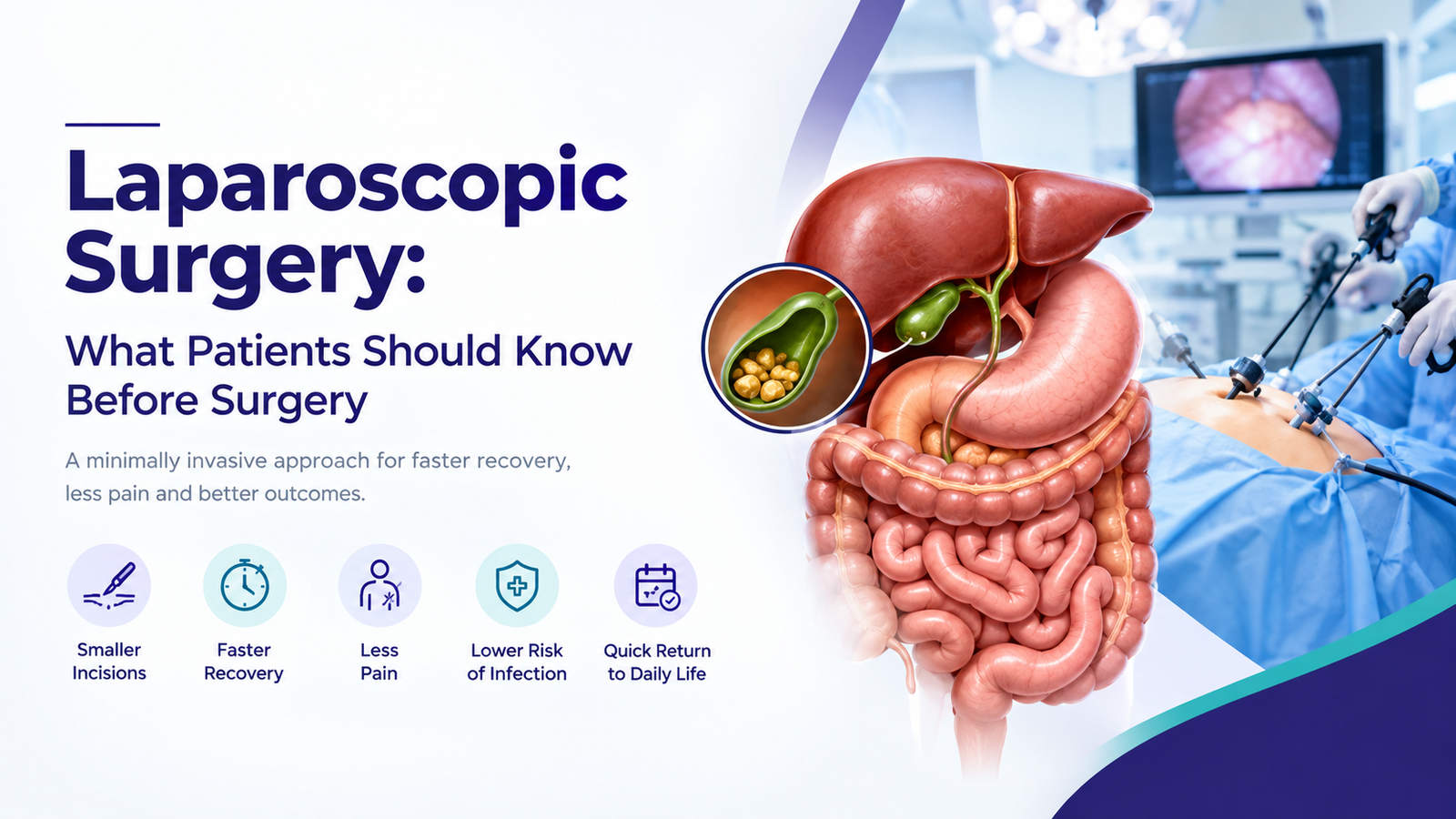
Laparoscopic surgery is a minimally invasive surgical technique performed through small incisions using a camera and specialized instruments. It is commonly used for procedures such as gallbladder removal, hernia repair, appendectomy, and several abdominal surgeries.
Compared with traditional open surgery, laparoscopic procedures may offer smaller scars, less pain, shorter hospital stays, and a faster recovery in suitable patients. However, the right surgical approach depends on the patient’s condition, medical history, and the type of procedure required.
If surgery has been recommended, understanding the procedure, preparation, recovery, and possible risks can help you make an informed decision. Always discuss your treatment options with a qualified surgeon.
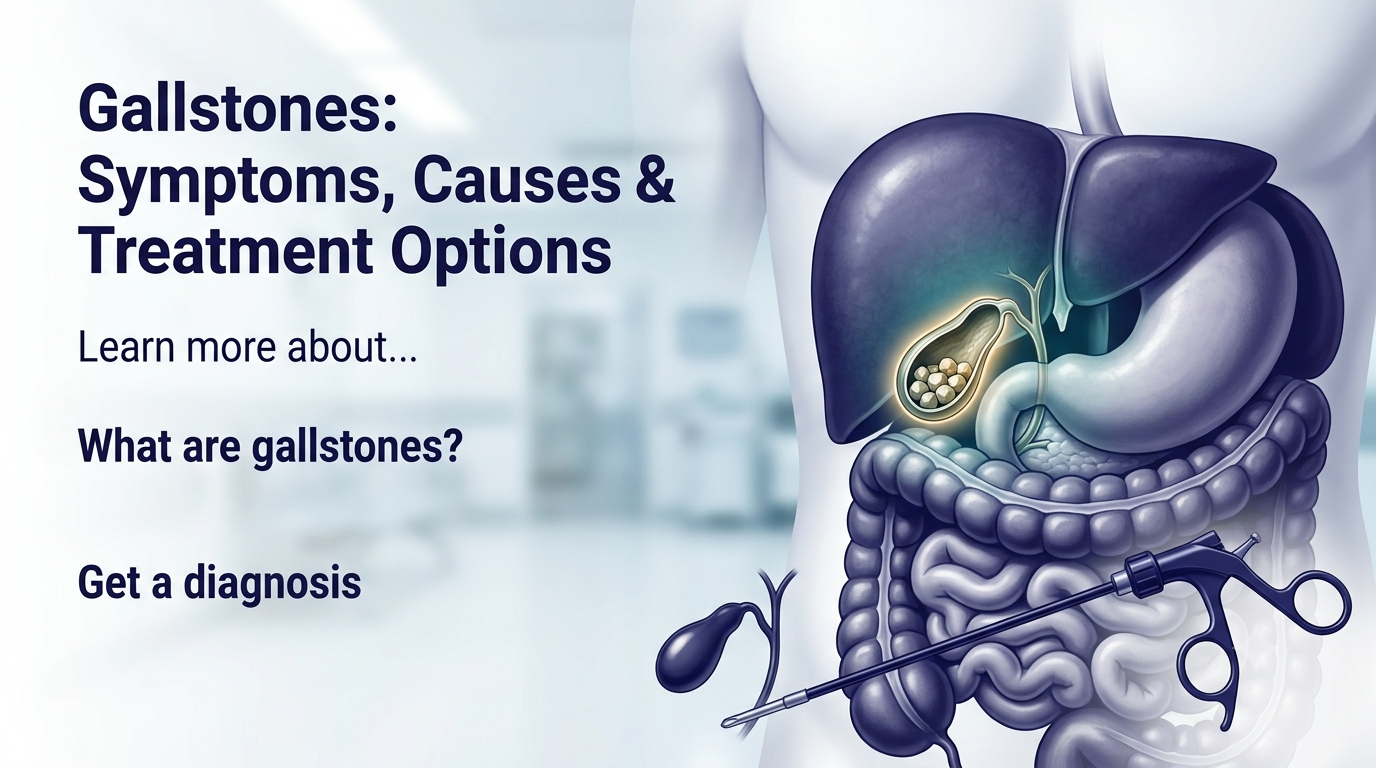
Gallstones are hardened deposits that form inside the gallbladder and may cause pain or digestive problems. Some people have no symptoms, while others may experience sudden pain in the upper right abdomen, nausea, vomiting, bloating, or indigestion, especially after a fatty meal.
Gallstones can develop due to changes in the composition of bile and other factors. When symptoms occur repeatedly or complications develop, medical evaluation is important.
Treatment depends on the size, location, and symptoms. While some gallstones may not require treatment, symptomatic cases may need medicines or surgical removal of the gallbladder, often through minimally invasive laparoscopic surgery. Early consultation can help prevent complications and guide the right treatment.
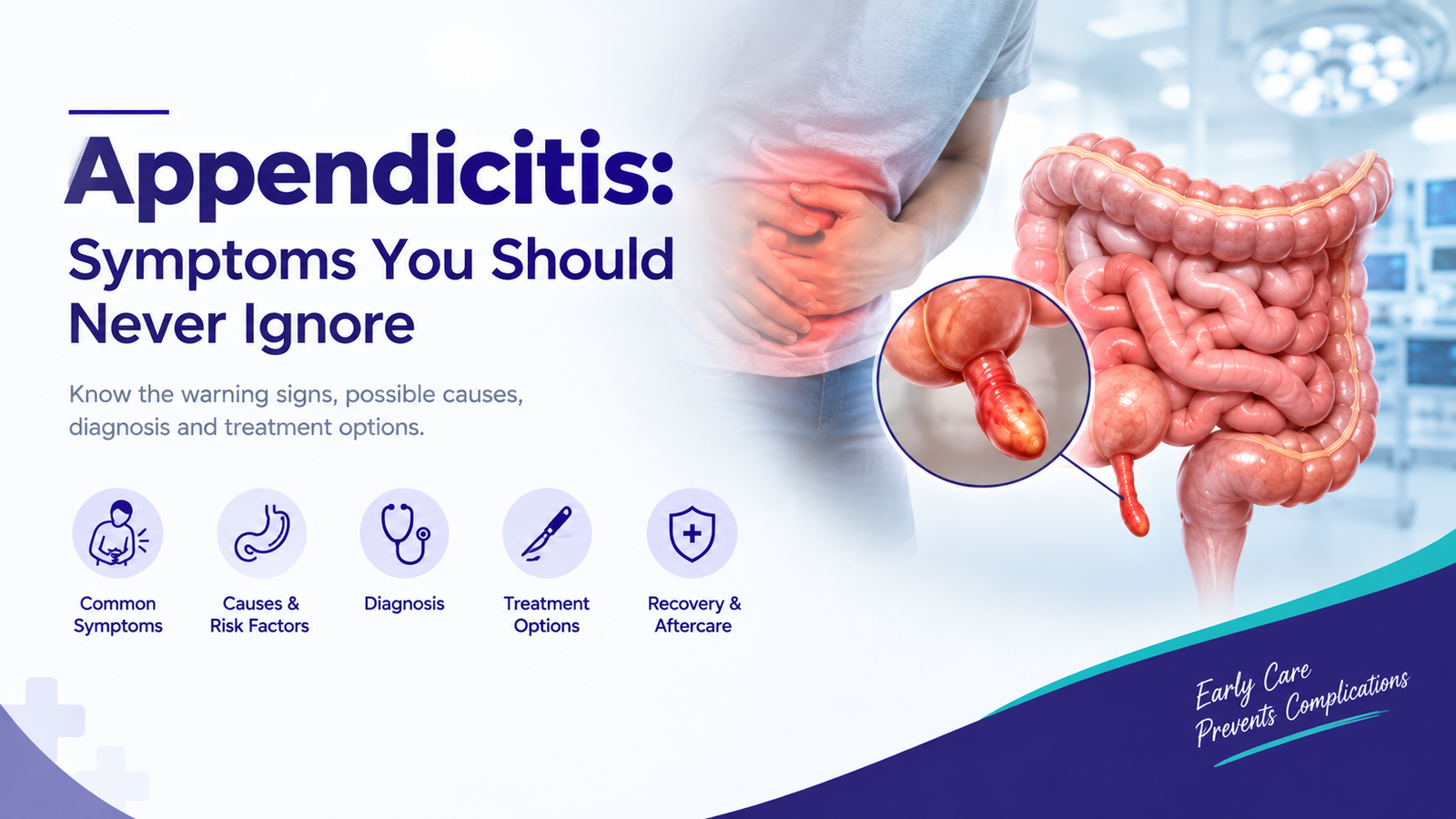
Appendicitis occurs when the appendix becomes inflamed and may require prompt medical attention. It commonly begins with pain around the belly button that gradually moves to the lower right side of the abdomen.
Common symptoms include abdominal pain, nausea, vomiting, loss of appetite, fever, and changes in bowel movements. Pain may become worse with movement, coughing, or walking.
Early diagnosis and timely treatment can help prevent complications such as a ruptured appendix. Treatment may include antibiotics or surgery, depending on the condition. If you experience persistent or severe abdominal pain, consult a surgeon promptly.