
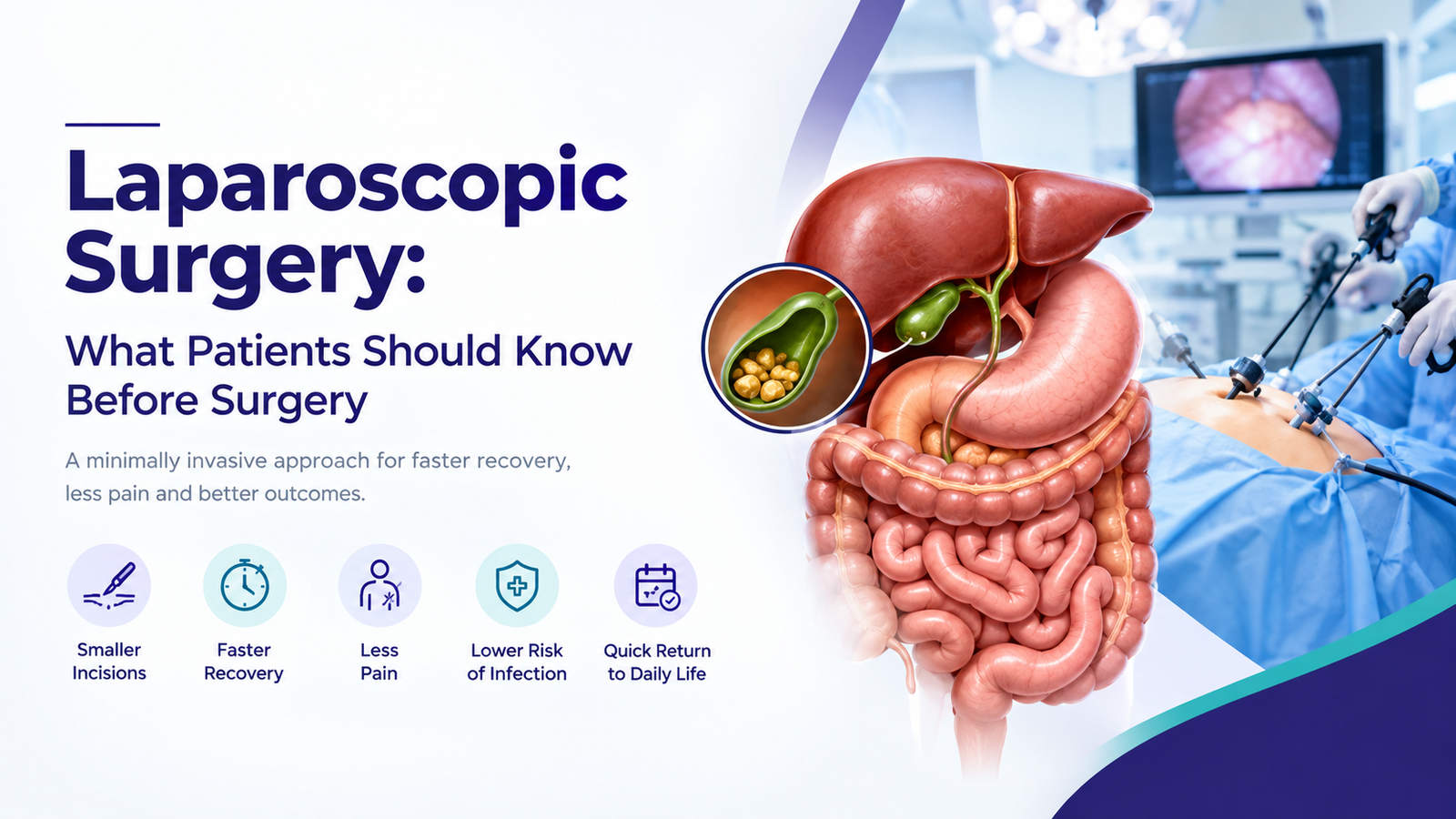
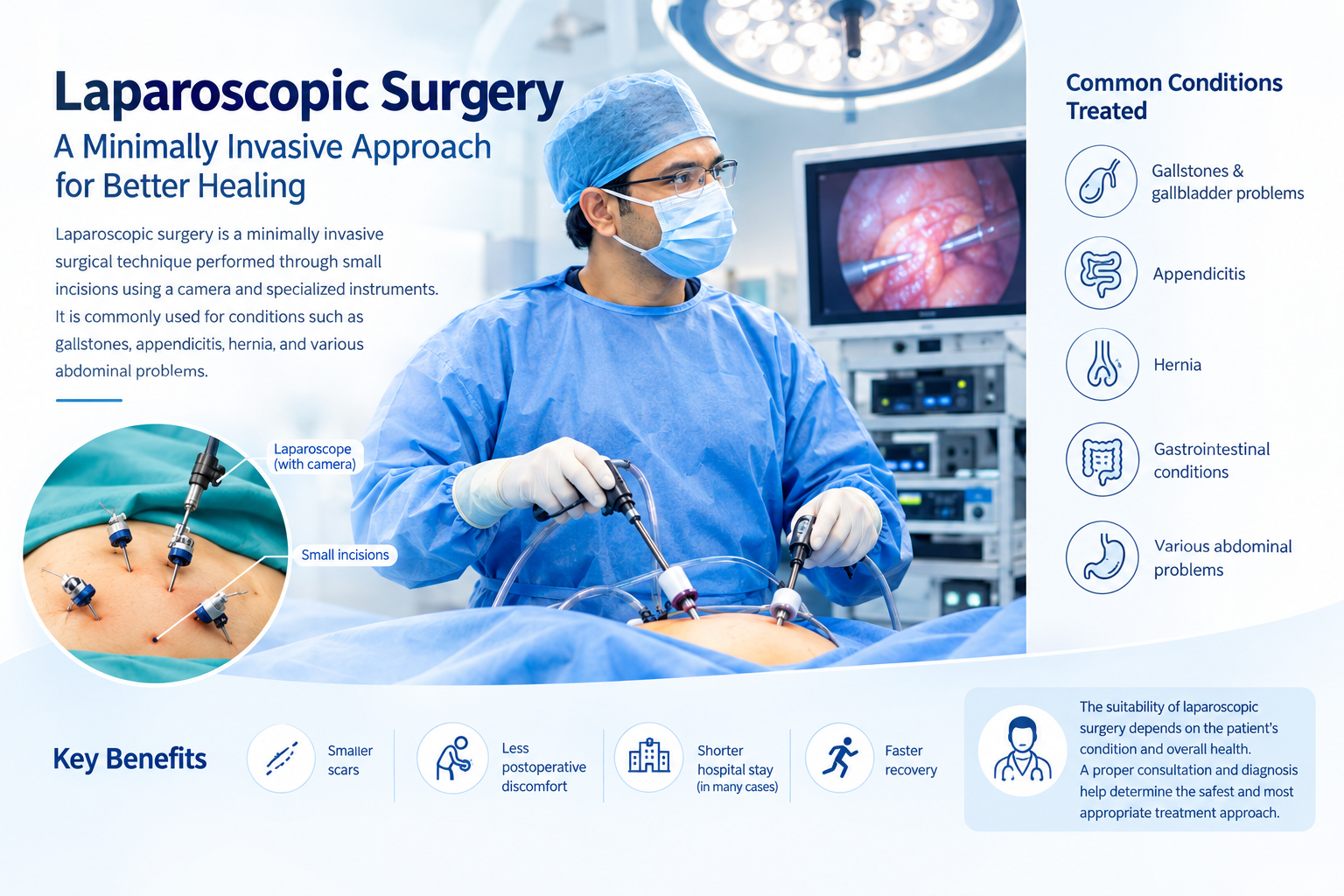
Laparoscopic surgery is a minimally invasive surgical technique performed through small incisions using a camera and specialized instruments. It is commonly used for conditions such as gallstones, appendicitis, hernia, and various abdominal problems.
Compared with traditional open surgery, laparoscopic procedures may offer smaller scars, less discomfort, shorter hospital stays, and faster recovery. However, the suitability of laparoscopic surgery depends on the patient’s condition and overall health.
1. What Is Laparoscopic Surgery?
Explain laparoscopic or minimally invasive surgery in simple language and how it differs from traditional open surgery.
Laparoscopic surgery is a minimally invasive surgical technique performed through small incisions using a camera and specialized instruments. It is commonly used for conditions such as gallstones, appendicitis, hernia, and various abdominal problems.
Compared with traditional open surgery, laparoscopic procedures may offer smaller scars, less discomfort, shorter hospital stays, and faster recovery. However, the suitability of laparoscopic surgery depends on the patient’s condition and overall health. A proper consultation and diagnosis help determine the safest and most appropriate treatment approach.
2. How Is Laparoscopic Surgery Performed?
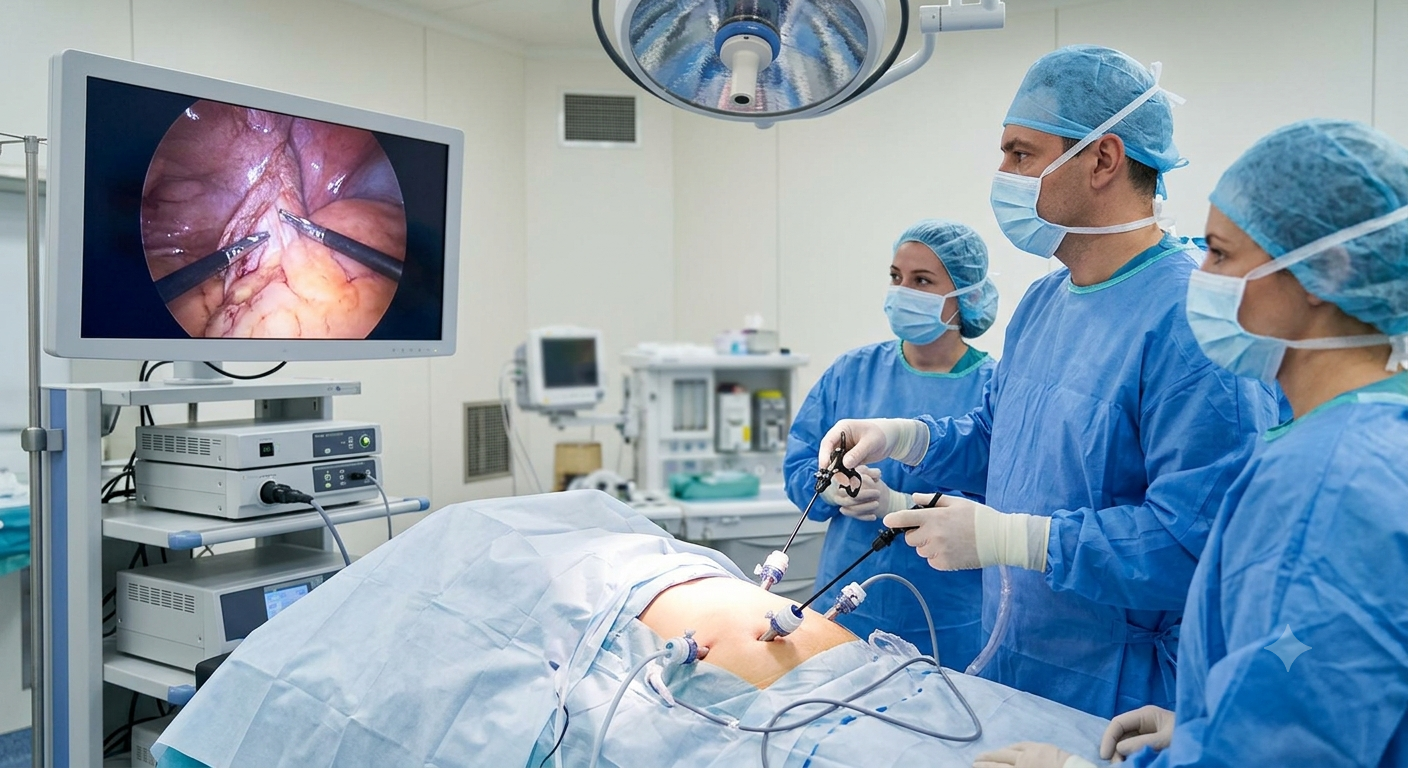
Briefly explain the small incisions, laparoscope, camera, and specialized surgical instruments.
3. What Conditions Can Be Treated with Laparoscopic Surgery?
Cover common examples such as:
Gallstones and gallbladder problems
Appendicitis
Hernia
Gastrointestinal conditions
Some abdominal and digestive disorders
4. Benefits of Laparoscopic Surgery
Smaller incisions
Less postoperative discomfort
Reduced scarring
Shorter hospital stay in many cases
Faster return to normal activities
5. Is Laparoscopic Surgery Suitable for Everyone?
Explain that suitability depends on the patient's condition, medical history, previous surgeries, overall health, and the type of procedure required.
6. What to Expect Before Surgery
Consultation, diagnosis, medical tests, preparation, and discussion with the surgeon.
7. Recovery After Laparoscopic Surgery
Talk about follow-up, activity, wound care, diet when applicable, and returning to normal activities.
8. Laparoscopic vs Open Surgery
A simple comparison table would make this section very useful for patients.
9. When Should You Consult a Surgeon?
Encourage patients with persistent abdominal pain, digestive problems, or a diagnosed condition requiring surgery to seek professional evaluation.
10. Conclusion
Emphasize that laparoscopic surgery can offer important advantages, but the right surgical approach should be decided after proper diagnosis and individual evaluation.
Stay updated with the latest health tips and surgical insights


Copyright 2026. Dr.Gidion Bangla. All rights reserved | Marketed by sparkledigi