
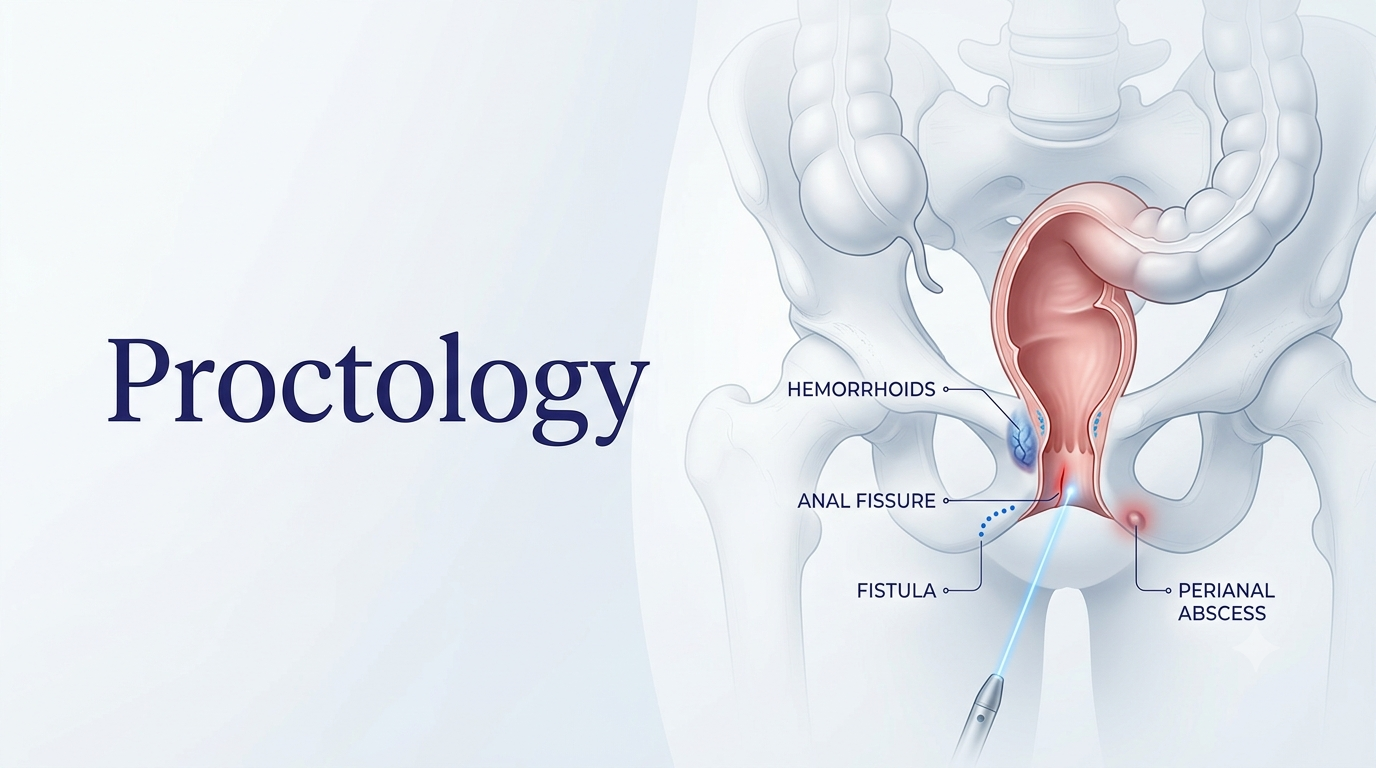
Proctology focuses on the diagnosis and treatment of conditions affecting the anus, rectum, and lower bowel. Common conditions include piles (hemorrhoids), anal fissures, fistula, abscesses, and other anorectal disorders. Treatment is based on the condition and its severity and may include medication, lifestyle changes, minimally invasive procedures, or surgery when required. Early evaluation can help manage symptoms effectively and prevent complications.
Proctology is a specialized branch of surgical care focused on the diagnosis and treatment of conditions affecting the anus, rectum, and lower part of the digestive tract. These problems can cause pain, bleeding, itching, swelling, difficulty passing stools, or discomfort during bowel movements and may significantly affect everyday life.
Common anorectal conditions treated under proctology include piles (hemorrhoids), anal fissures, fistula-in-ano, perianal abscesses, pilonidal sinus, rectal prolapse, and other disorders of the anal and rectal region.
Treatment begins with a detailed assessment of the patient's symptoms, medical history, bowel habits, and overall health. When required, physical examination and appropriate diagnostic investigations help identify the underlying problem and determine the most suitable treatment.
Depending on the condition and its severity, treatment may include medications, dietary and lifestyle modifications, stool-softening measures, minimally invasive procedures, or surgical treatment. For conditions such as piles, procedures may include rubber-band ligation or other interventions, while persistent anal fistulas may require procedures such as fistulotomy or seton treatment.
The treatment approach is carefully selected according to each patient's individual needs, with emphasis on accurate diagnosis, effective symptom relief, preservation of normal bowel function, patient safety, and comfortable recovery.
Patients are guided throughout the treatment journey—from the initial consultation and diagnosis to the procedure, post-treatment care, and follow-up—helping them receive appropriate and personalized anorectal care.
Sign up for the best advice, tips, and the latest health updates.


Copyright 2026. Reserved by Dr.Gidion Bangla | Marketed by sparkledigi