
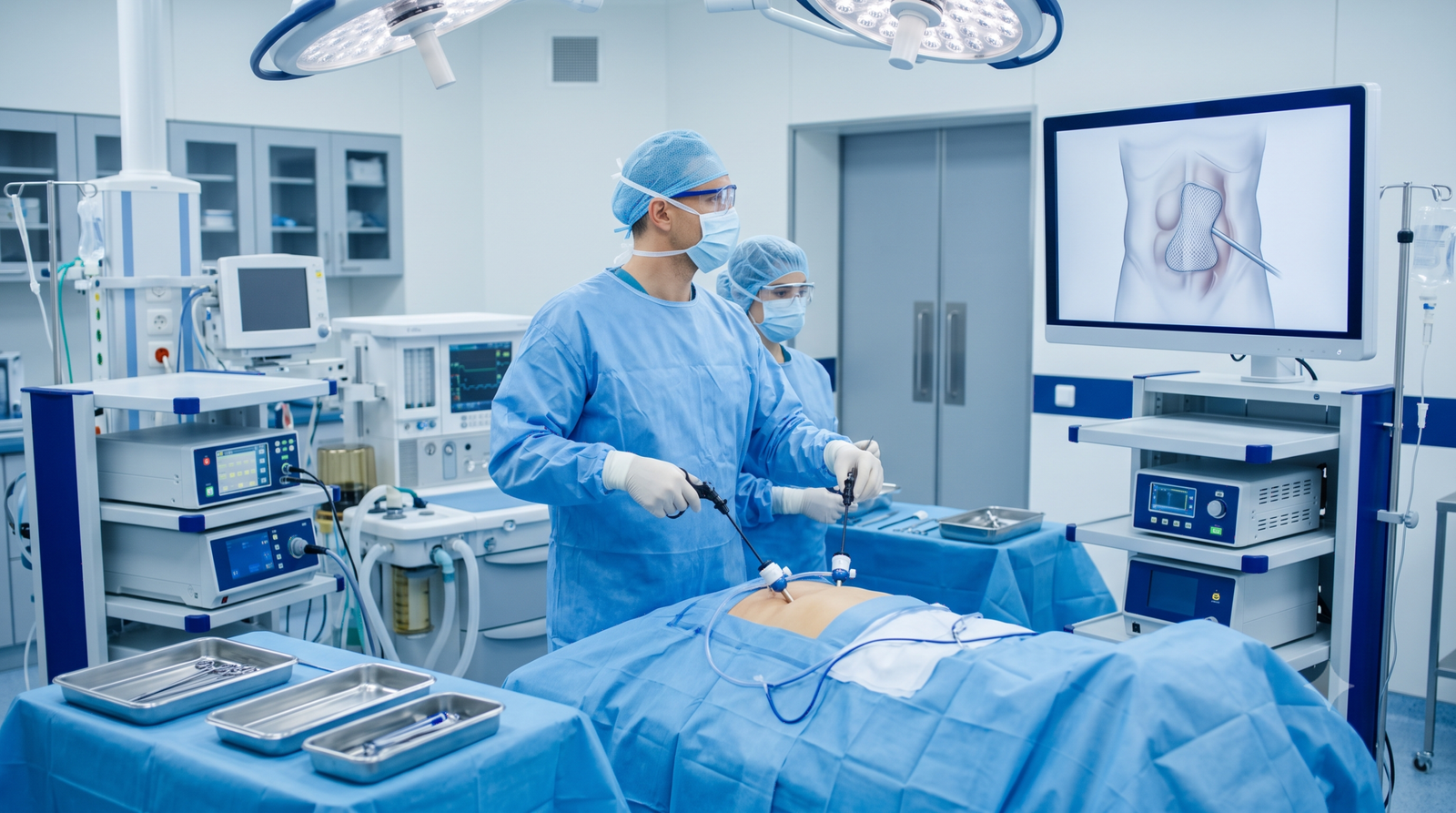
Hernia surgery is a procedure to repair a hernia by returning the protruding tissue to its proper position and strengthening the weakened abdominal wall. It may be performed using open or laparoscopic techniques, depending on the patient’s condition.
Hernia surgery is a specialized procedure performed to repair a hernia, a condition in which an internal organ or tissue protrudes through a weakened area of the surrounding muscle or abdominal wall. Hernias may develop due to muscle weakness, aging, previous surgeries, heavy lifting, chronic coughing, or increased pressure within the abdomen.
Inguinal Hernia: Occurs in the groin area and is one of the most common types of hernia.
Umbilical Hernia: Develops near the belly button when tissue protrudes through a weakened area.
Incisional Hernia: Occurs at the site of a previous surgical incision.
Hiatal Hernia: Develops when part of the stomach moves upward through the diaphragm into the chest.
Patients with a hernia may notice a visible bulge in the abdomen or groin, discomfort while lifting heavy objects, pain during coughing or bending, a feeling of pressure, or swelling that becomes more noticeable when standing. Some hernias may not cause symptoms initially but can gradually increase in size.
Treatment depends on the type, size, symptoms, and overall health of the patient. Some hernias may be monitored under medical supervision, while others require surgical repair.
Open Hernia Repair: The surgeon makes an incision near the hernia to return the protruding tissue to its proper position and repair the weakened area.
Laparoscopic Hernia Repair: A minimally invasive technique that uses small incisions, a camera, and specialized surgical instruments. Surgical mesh is often used to reinforce the weakened area.
Robotic-Assisted Hernia Repair: In selected cases, robotic technology may assist the surgeon in performing the repair with enhanced instrument control.
Depending on the procedure and the patient's condition, hernia repair may help relieve discomfort, restore abdominal wall strength, improve daily activities, and reduce the risk of complications associated with the hernia. Minimally invasive techniques may also offer smaller incisions and a quicker recovery for suitable patients.
Recovery varies depending on the type of hernia, surgical technique, and individual health. Patients are generally advised to follow their surgeon’s instructions regarding wound care, physical activity, lifting restrictions, medication, and follow-up appointments. A gradual return to normal activities helps support healing.
Consult a qualified surgeon if you notice a new bulge in your abdomen or groin, persistent discomfort, or swelling that increases with activity. Sudden severe pain, a firm or tender bulge, vomiting, or difficulty passing stools or gas may indicate a serious complication and require emergency medical attention.
Our focus is on accurate diagnosis, personalized treatment planning, and appropriate surgical techniques tailored to each patient. A detailed clinical evaluation helps determine whether observation or surgery is suitable, with an emphasis on patient safety, effective treatment, and recovery.
Note: The appropriate treatment and surgical technique are determined after an individual medical assessment.
Sign up for the best advice, tips, and the latest surgical updates.


Copyright 2026. Dr.Gidion Bangla. All rights reserved | Marketed by sparkledigi