
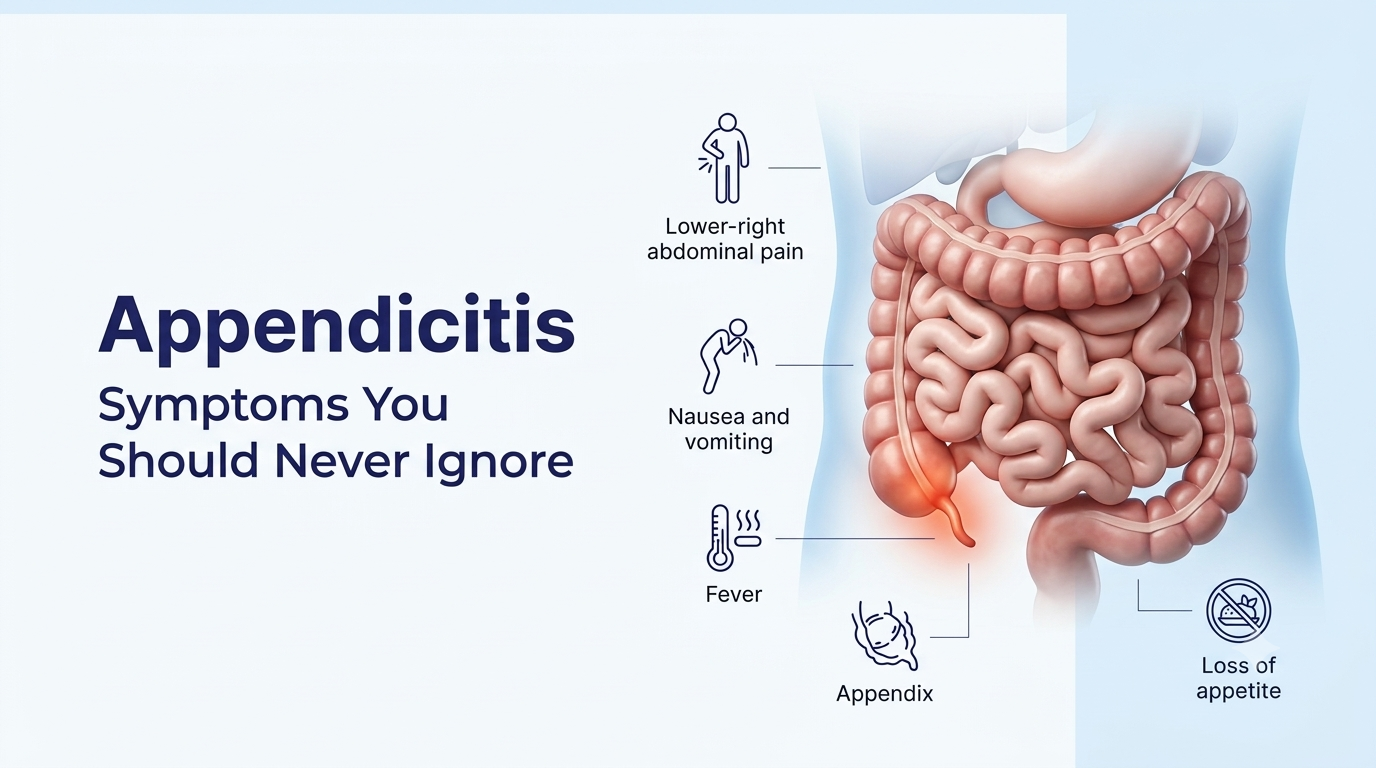
Appendicitis is the inflammation of the appendix, which can cause sudden abdominal pain, often starting near the belly button and moving to the lower-right side. Other symptoms may include nausea, vomiting, loss of appetite, and fever. Appendicitis requires prompt medical evaluation, as untreated inflammation can lead to complications such as a burst appendix. Treatment may involve antibiotics and, when needed, surgical removal of the appendix (appendectomy), often through laparoscopic surgery.
Appendicitis is a condition in which the appendix becomes inflamed. The appendix is a small, finger-shaped pouch attached to the large intestine, located in the lower-right part of the abdomen.
Appendicitis can develop suddenly and may become serious if it is not treated promptly. In some cases, the appendix can burst, leading to infection inside the abdomen. Recognizing the warning signs and seeking medical attention early can help prevent complications.
Appendicitis occurs when the appendix becomes inflamed, often because its opening becomes blocked. The blockage may be caused by hardened stool or swollen tissue associated with an infection. Inflammatory bowel disease may also increase the risk.
Once the appendix becomes inflamed, pressure can build inside it, causing pain and other symptoms. Without appropriate treatment, the appendix may rupture.
The symptoms of appendicitis can vary from person to person. However, abdominal pain is usually the most noticeable symptom.
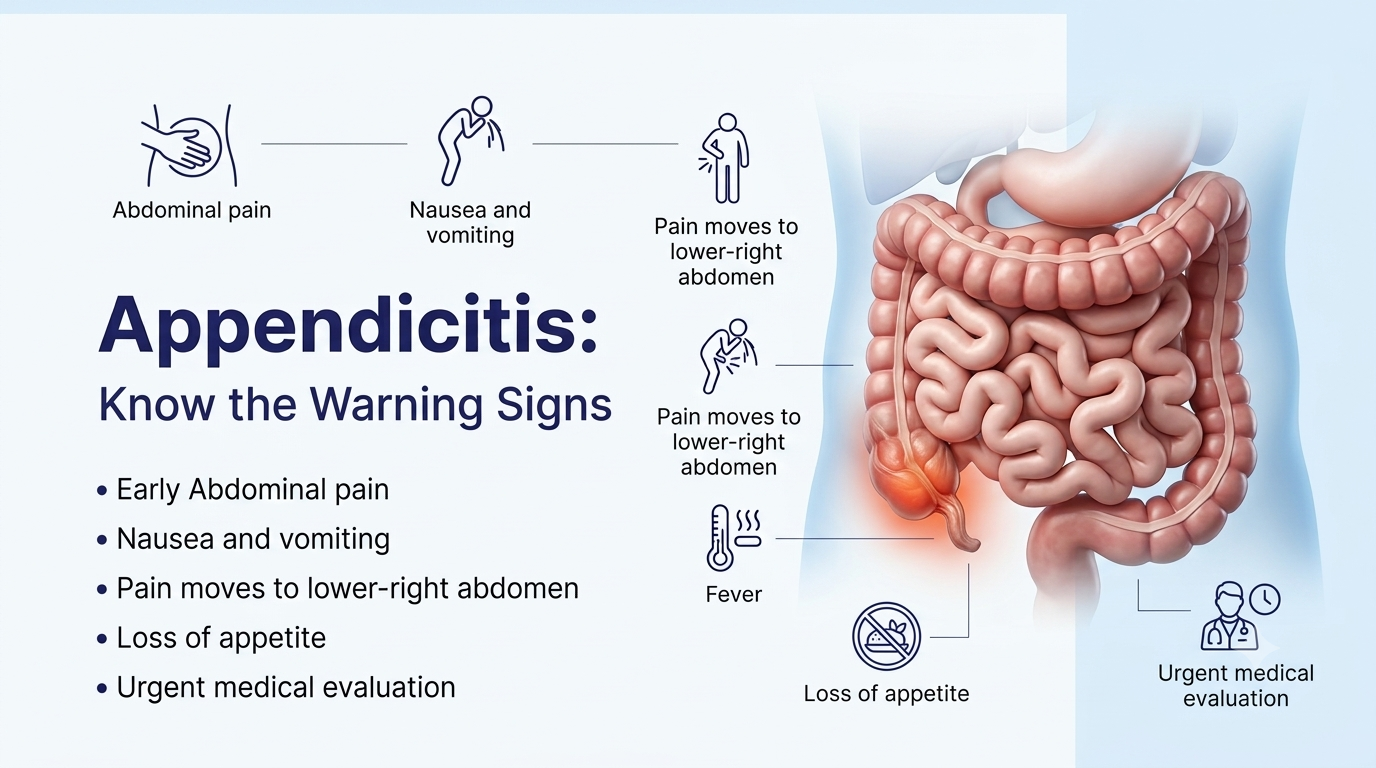
Pain may initially begin around the belly button and then move toward the lower-right side of the abdomen. Over several hours, the pain may become more severe and constant.
Pain may become worse when you:
Walk or move around
Cough or sneeze
Take a deep breath
Make sudden movements
Not everyone experiences the classic pattern of pain, particularly children, older adults, and pregnant women.
A sudden loss of appetite can occur along with abdominal pain and nausea.
Some people may feel nauseated or vomit, particularly after the abdominal pain begins.
A low-grade fever may occur as the body responds to inflammation and infection.
Appendicitis can sometimes cause constipation or diarrhea. Some people may also have difficulty passing gas or feel that having a bowel movement might relieve the discomfort.
Some people may experience bloating or swelling of the abdomen.
Persistent or worsening abdominal pain should not be ignored.
Seek urgent medical attention if you experience:
Severe or worsening abdominal pain
Pain that moves to the lower-right abdomen
Persistent vomiting
Fever along with abdominal pain
Increasing abdominal swelling
Severe pain that spreads across the abdomen
A ruptured appendix can cause peritonitis, a serious infection inside the abdomen, and may require urgent treatment.
In many cases, the exact cause cannot be identified. However, appendicitis can occur when the opening of the appendix becomes blocked.
Possible causes include:
Hardened stool blocking the appendix
Swollen tissue following an infection
Inflammatory bowel disease
Other forms of blockage or inflammation
The blockage can cause bacteria to multiply and inflammation to develop inside the appendix.
Diagnosing appendicitis involves assessing your symptoms, medical history, and physical examination.
Your doctor may recommend:
The doctor examines the abdomen and checks for tenderness, particularly in the lower-right area.
Blood tests may help identify signs of infection or inflammation.
A urine test can help rule out other conditions, such as urinary tract infections or kidney stones.
An abdominal ultrasound may be used to examine the appendix, particularly in children and pregnant women.
A CT scan can provide detailed images of the abdomen and may help confirm appendicitis or identify complications.
MRI may also be used in selected patients, particularly when avoiding radiation is important.
Treatment depends on the severity of the condition and whether complications are present.
The most common surgical treatment is an appendectomy, which involves removing the inflamed appendix.
In laparoscopic surgery, the surgeon makes small incisions and uses a camera and specialized instruments to remove the appendix.
Potential advantages include:
Smaller incisions
Less postoperative discomfort
Reduced scarring
Shorter recovery in many patients
The appropriate surgical approach depends on the patient's condition and the surgeon's assessment.
In some situations, open surgery may be required. This involves a larger incision and may be considered when the appendix has ruptured or when laparoscopic surgery is not suitable.
Some selected cases of uncomplicated appendicitis may be treated with antibiotics alone. However, surgery remains a standard treatment, and the decision depends on the individual patient's condition, test results, and risk of complications.
Untreated appendicitis can become dangerous.
The appendix may rupture, allowing infection to spread into the abdominal cavity. This can result in:
Peritonitis: Serious infection of the abdominal lining
Appendicular abscess: A collection of pus around the appendix
Severe abdominal infection
The need for more extensive treatment
Prompt medical evaluation can reduce the risk of these complications.
Children may not always describe their symptoms clearly. They may simply complain of stomach pain, refuse food, become irritable, or experience nausea and vomiting.
Because symptoms can be less typical in children, persistent or worsening abdominal pain should be evaluated by a doctor rather than being assumed to be a simple stomach upset.
There is no guaranteed way to prevent appendicitis because its exact cause is not always known. The most important step is recognizing the symptoms and seeking medical attention promptly when they occur.
Abdominal pain is the most common symptom, but the location and severity can vary. Some people may not experience the typical symptoms.
Not every case is managed in exactly the same way. Selected uncomplicated cases may be treated with antibiotics, but appendectomy remains a common and standard treatment.
Appendicitis should not be assumed to resolve on its own. Because the condition can worsen and the appendix can rupture, suspected appendicitis requires prompt medical evaluation.
Recovery varies depending on the patient's health and whether complications were present. Your surgeon will provide specific instructions regarding physical activity, wound care, diet, and returning to normal activities.
Yes. The appendix is not essential for normal life, and most people recover fully after an appendectomy.
If you develop persistent or worsening abdominal pain, especially pain that moves toward the lower-right side of the abdomen and is accompanied by nausea, vomiting, fever, or loss of appetite, seek medical evaluation promptly.
Appendicitis can progress quickly, so early diagnosis and appropriate treatment are important.
Appendicitis may begin with what seems like ordinary stomach pain, but the symptoms can become increasingly severe over a short period. Pain that starts near the belly button and moves to the lower-right abdomen, particularly when accompanied by nausea, vomiting, fever, or loss of appetite, should not be ignored.
Early medical evaluation can help confirm the diagnosis and determine the appropriate treatment. If appendicitis is suspected, do not delay seeking medical care, as untreated inflammation can lead to a ruptured appendix and serious infection.
Experiencing persistent abdominal pain?
Schedule a consultation for proper evaluation and personalized treatment guidance.
Sign up for the best advice, tips, and the latest health updates .


Copyright 2026. Dr.Gidion Bangla. All rights reserved | Marketed by sparkledigi